For years I have been trying to cook traditional Japanese pastry (wagashi) which I really like, but with poor results. Speaking about nerikiri, then, it was necessary to stay in the kitchen for up to two days but, despite the taste that was very similar to the original, the aesthetic aspect (extremely important because it is linked to seasonality) was really disappointing.
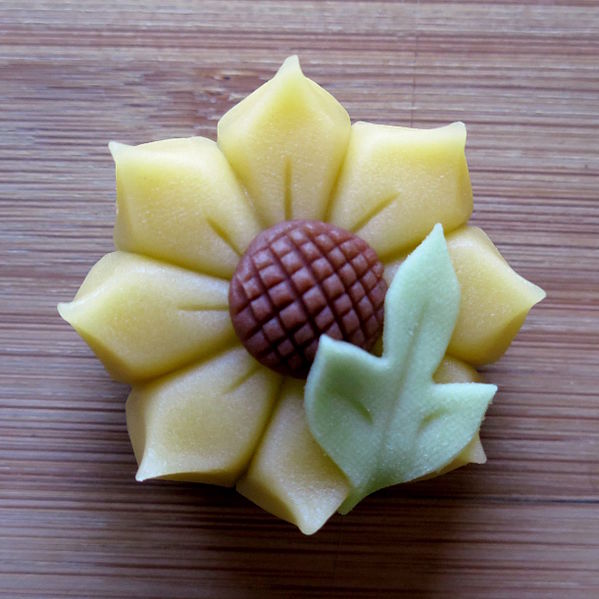
During one of my trips to Japan, a tea teacher asked me if we served Italian sweets in Italy. At the time I was amazed by this question as tea ceremony is a traditional Japanese art, and I replied: “No, of course only Japanese sweets”.
Then he asked: “Are there traditional Japanese wagashi shops in Italy?”.
I replied: “No, none. We make them at home by having the ingredients shipped directly from Japan”.
Finally she looked at me very surprised exclaiming: “How good! We, here in Japan, almost always buy them at the wagashi shop!”.
Her initial question was much deeper than I understood then.
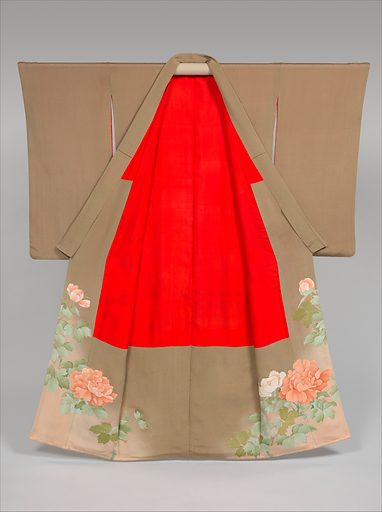
I have never loved the kimono either. Of course I appreciate the aesthetic beauty of the paintings on silk but I consider it a very uncomfortable dress and not very suitable for Western women who, like me, have “more rounded shapes”. Of course I learned to dress it and I dress it many times but I don’t do it for pleasure but for duty.
Like many other Italians, when I started attending tea ceremony classes, I did it privileging comfort so I went to study with a teacher from the Omotesenke School without asking myself too much what the real differences were between the Schools.
After more than fourteen years of study, these differences became quite abrupt to me.
I had always felt a bit of an intruder within the all-Japanese class, but it was more so when the teacher decided to scold me for not having learned her language yet and started speaking to me only in Japanese.
And if I had wanted to attend higher levels, I would still have had to do it exclusively in Japanese.
Until one day I was told: “I don’t expect you to do the tea ceremony perfectly, nor that you think like a Japanese. I expect you to become Japanese!”.
For me it was a shock.
I realized that there were too many incompatible things between my way of thinking and what you wanted me to adopt and I realized that the orientation of a School, with its principles more or less open to foreigners rather than women, it was extremely important.
Fortunately I found “shelter” at the Urasenke School, much more tolerant on some points such as openness to the different cultures of the world.
The Tea Master, director of Urasenke Italia, Mrs. Emma Di Valerio, told me: we are Italian and we should find our own Italian way of tea.
Why necessarily use Japanese sweets when we have a regional pastry with an ancient tradition?
Why must we speak in Japanese when, among Italians, we could say the same things in Italian?
Why use all Japanese utensils when we have beautiful handcrafted ceramics with the same shapes and sizes as their Japanese ones?
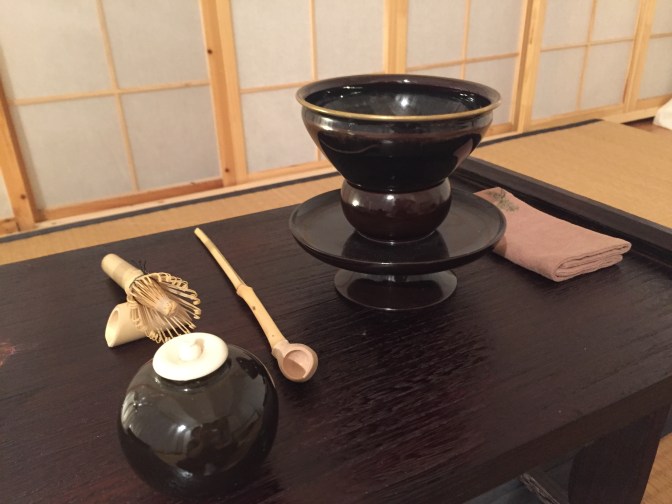
The Japanese tea ceremony has its origins in the ancient Chinese tea ceremony of the Song era: the Dian Cha. At the time, compressed green tea was stone ground to obtain a very fine powder which was then mixed with water through a bamboo whisk (very different from the current one) in tenmoku-type bowls on lacquered or carved wooden pedestals.
Once brought to Japan by Buddhist monks, this ceremony was immediately well received in all monasteries and then also by the Shoguns and the Samurai class.
The Japanese, however, have made several changes to the Chinese ceremony: from lavish cups and utensils to wabi-cha- pottery, from traditional Chinese dress to kimono, from Chinese green tea to matcha to the language used that has become Japanese, and many other things.
Yet still today they retain many Chinese characteristics that often they do not even know they have: the tenmoku cup on tenmoku-dai, specific containers of koicha tea (karamono chaire), the Chinese language in the calligraphy of kakejiku, etc.
But the Japanese have elevated this art to the national symbol of all of Japan.
As soon as they begin to study the tea ceremony, many Italians dream of buying their first kimono and using it for a ceremony.
The kimono is the traditional Japanese dress not the symbol of the tea ceremony.
For me the symbol of the tea ceremony, the sign of my “belonging” to this particular world has always been fukusa, but Zen teaches us that what is important is within us. It tells us that we don’t need symbols of belonging. Sometimes we practice and train in a very special “tea ceremony”, the “ceremony of emptiness”, where there are no utensils, there is no brazier, there is no tea and there is no fukusa.
The essence is only Zen.
Because the gate to Zen is Matsukaze and the gate to Matsukaze is inside us. *
To this end, I decided to follow in the footsteps of my current teacher and serve Italian sweets, speak Italian (to Italians), add some Italian and other objects from other parts of the world to the numerous Japanese objects. Sometimes I even made paintings of some seasonal shikishi on which I had classic Zen phrases written by Shodo Masters.
This sign of fusion is a sign of civilization.
Urasenke wanted to promote the Tea Way as a union between peoples for common peace.
And to do this it is necessary to go to the essence of Chado and know what is fundamental and what can simply be the heritage of a people or a culture.
The tea ceremony is the Way, the technique is the means. The rest is just the precious culture of a people.
I hope to be able in future posts to show you some particular non-Japanese objects perfect for the tea ceremony.
_____________________________
* Matsukaze literally means “sound of the wind in the pines” but its meaning of “gateway to Zen” comes from a famous Chan story (Zen, Seon).

 The art of tea blog / Blog l'arte del tè