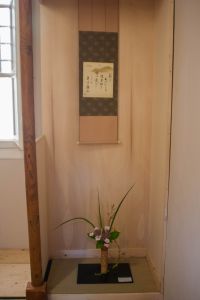
Haiken is a term that encompasses various moments of the Japanese tea ceremony in which arrangements and objects are usually viewed.
The first haiken that guests make inside the tea room is the one that leads them to view the tokonoma (the characteristic alcove in the wall where the jiku, the scroll with the inscriptions, and the chabana, the floral composition, are located) and the ‘preparation of objects for tea that are already present: the brazier (furo if we are in the summer season or ro if we are in the winter one), the screen and possibly the otana cabinet with mizusashi (fresh water container) and any other items.
The entrance of the guests into the tea room is as beautiful and synchronized as a dance: when one person slowly descends to his knees to sit seiza and admire the objects, at the same time another descends to the seiza position in front of the tokonoma and yet another one sits at the entrance to the tea room. The guests then all get up together and exchange places by walking at the same pace so as not to collide or cross each other even in a very small space.
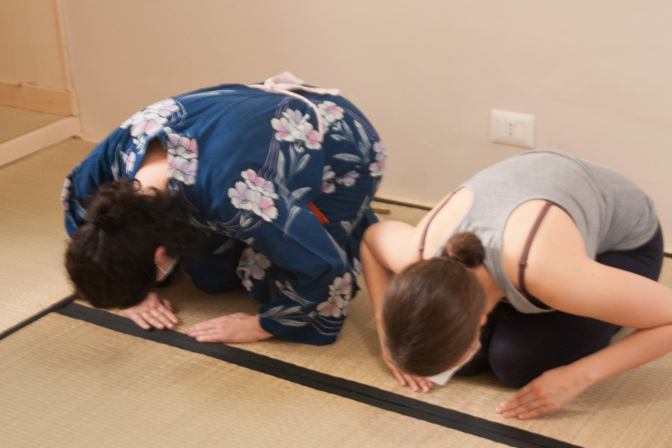
Once seated in front of the tokonoma, one bows to bring particular respect to Nature embodied by the floral composition and to Zen embodied by the kakejiku, while when sitting in front of the objects one does not bow but merely observes their workmanship and their beauty.
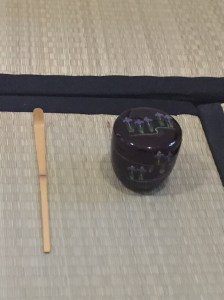
At the end of the ceremony, whether it was usucha or koicha, we have another haiken moment.
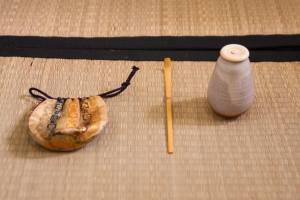
Towards the end of the ceremony, in fact, the first guest asks the Master to be able to view the objects that have been used so, in the case of a usucha, the natsume (matcha tea container) is again purified with the silk napkin, suitably turned, so that the front side is on the side of the guest, and approached to it in the central tatami. The teaspoon is also turned and placed next to the tea container.
The Master then goes out to allow her guests time to calmly observe the objects.
The first guest takes them with him then, as soon as he is seated, he places them on his left (on his tatami) and bows to the second guest as if to apologize for having the chance to look first.
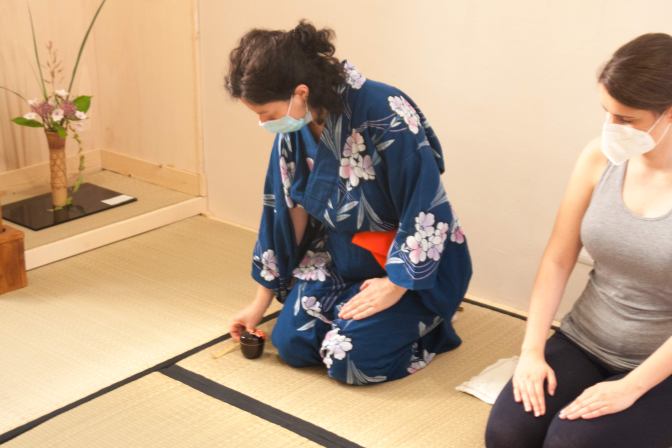
The first guest begins to observe the tea container by placing it at a certain distance from him and being careful to keep it firmly on the ground and not to overturn it. He then passes the container to the second guest and begins viewing the spoon. Once finished, go to the second guest as well. The objects pass gradually among the guests until they reach the last one who, synchronizing with the first, gets up with him and hands him the objects. The first at this point turns the objects so that the front part is towards the Master and places them in the same tatami where they were given to her.
When the Master returns, the guests thank her for having a chance to look and ask some specific questions such as the shape and name of the tea container lacquerer rather than the carver and name of the teaspoon.
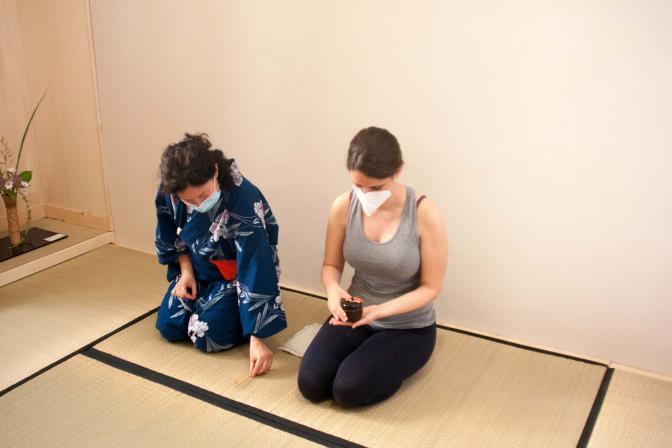
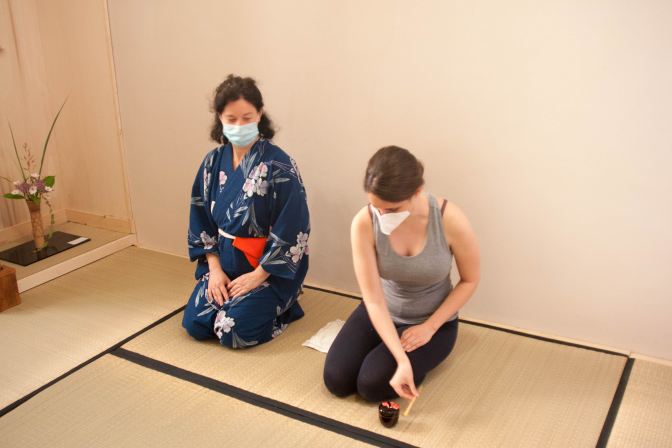
The haiken procedure is not used only in the two moments we have just seen, but during all the moments of the tea ceremony because it represents an important part of Japanese culture: the knowledge of the styles, techniques and artists of traditional teaware, but in the case of the “mei” (which we will talk later) also the knowledge of Japanese Festivities, seasonal flowers, Zen virtues and much more.
Precisely for this reason we find haiken at the entrance and exit from the tea room, at the end of the shozumi ceremony (first procedure of the charcoals ceremony), viewing the kogou (incense container) and at the end of each tea ceremony, both usucha and koicha.

 The art of tea blog / Blog l'arte del tè