A few months ago a friend of mine, international tea expert, Nicoletta Tul gave me her book about tea. During the International Tea Fair Italy held in early April 2021 (not physical edition but online edition due to Covid) I also had the opportunity to give a public lecture with her where we talked about tea in Korea and, of course, about her book.
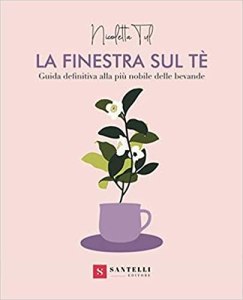
When I first got it in my hands I thought it was very small, and it irritated me slightly to read the subtitle “Definitive guide to the noblest of the beverages ” as it is impossible for anyone to write a definitive guide in an area as broad as the world of tea.
However, reading this book I found it really comprehensive on many topics.
The graphics are well cared for, with many evocative color images and the content ranges from the preparation of the various types of tea, to the description of the processing, up to the rituals of the various Asian countries.
The most interesting thing I found is that Nicoletta has left out the “classic” history of tea in the West and the equally “classic” part on afternoon tea recipes found in almost any text on the market, to focus much more on developing the areas of tea in China, Japan and Korea, on changing the method of processing and serving tea over the centuries and on tea ceremonies.
Two things in particular I liked: the easy and clear explanation of the botanical sub-varieties of the tea plant (cultivar), which hardly anyone talks about, and the large space dedicated to Korea, an excellent tea producer that is too often forgotten or overlooked.
In addition, the Japanese tea ceremony (Chado) has found a large chapter (11 pages!) In which both the story, the moments, and the Four Virtues are described and illustrated with many beautiful photographs.
(Just a few notes for my tea ceremony students: 1) the fukusa never folds with one hand, even when holding the chashaku in the right hand 2) pay attention to the differences between chaji and chakai that are not used to differentiate usucha Temae and Koicha Temae 3) the flower arrangement used in the tea room is called chabana).
The preparation schemes of the various teas are also very clear and well done, divided by type with seconds / minutes of infusion, quantity in grams and water temperature.
So what about this book? It may not be the “definitive guide” but it is certainly a very comprehensive manual that every tea lover should read!

 The art of tea blog / Blog l'arte del tè