Respect is a fundamental quality in all cultures of the world, so much so that I would dare to call it one of the characteristics of our humanity.
It could not therefore be otherwise for Japan where respect is brought to the highest levels and is really fundamental precisely as a rule of civil life and good education.
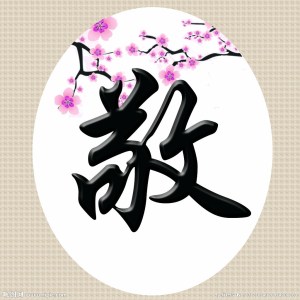
In the Japanese tea ceremony, respect is also one of the Four Virtues of the Tea Ceremony Master: “kei” (the character you can see in the image below).
However, most people when they think of respect they think of respect towards other individuals and as a form of “social obligation”.
Then there is a minority that sees respect not only for others but also for their own person and an even smaller circle that perceives it, as well as for people, even for animals and nature.
The tea ceremony helps us to understand that every form of respect is linked to the other and that having respect for others cannot be separated from having respect for oneself just as respect for oneself cannot be separated from that towards Nature and all other living beings. But it also teaches us something more: respect for objects that we commonly consider inanimate.

My first tea ceremony teacher once said to me: “Handle that bowl as if it were your own child!”.
At the time I thought she was exaggerating: treating objects with grace made sense but considering them as children I almost thought it was a “fanatic” thing.
Over time I realized that a tea bowl, like any other handcrafted tea ceremony object, is not just a bowl.
It is an impulse of creativity of a craftsman who conceived, designed it and who in its realization put the emotions he felt at that particular moment.
Those emotions were imprinted on the earth and when the bowl was cooked in the oven it was the very strength of the fire that sealed it.
Some bowls after being shaped are painted and bear the artist’s inspiration, while others are designed and cooked in raku ovens and it is only the force of Nature that will decide what will be the true final result of balance between shape and color nuance.
The craftsman will then give this bowl a name that reflects it and will write it together with his own on a beautiful wooden box that will forever be its treasure chest. That bowl will finally be chosen by a Tea Master for those sensations it aroused in him as soon as he sees it and will be used for many ceremonies, for countless chaji, for many years … It will see many students alternating, it will see happy and painful seasons of life, it will see summers and winters.
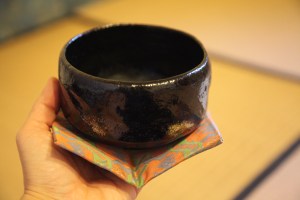
Now when I look at that bowl I see Nature, I see the passion of an artist for his work, I see the passing of the seasons and time, but above all I see how I was and how I have become now and I understand that I am not the “owner” of that bowl. Just as we are not owners of our children but we are only their “guardians” so I am not the owner of that bowl but I am only its “caretaker”.
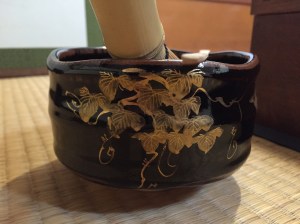
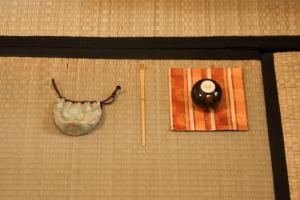
Whenever we handle a chashaku (bamboo spoon) or chawan (tea bowl), rather than a kogo (incense container), we must first understand the great experience they have, give them respect and behave accordingly. to be custodians of it.
All objects are worthy of respect, but some objects of particular value in the tea ceremony are treated with even greater care: this is the case of the Kazari Temae
飾 り which are specific procedures for showing respect to objects.
But now I finish this post and I propose to make a post dedicated exclusively to the Kazari as soon as possible!

 The art of tea blog / Blog l'arte del tè