The Chinese tea ceremony is born from the interpenetration of philosophies and religious doctrines. Mostly Confucianism, Taoism and Buddhism, but regardless of the perspective with which it is seen and lived, the relationship with Nature has always been and always will be a priority for tea drinkers.

In particular it is believed that at the center of the relationship between Man and Nature there are “The Four Gentlemen”. These are three key natural elements that are never lacking on the tea table or in the gardens of the best oriental tea rooms or in the poems and poems related to our beloved drink.
The first “gentleman” is Meihua (梅花) that is the plum blossom.
It is particularly significant as it is the first flower to bloom at the end of winter and signals the imminent arrival of spring.
The plum blossom is also called the flower of the three virtues and the five happinesses.

It is often visible even under a blanket of snow with its stupendous bright pink or more tenuous color, showing great tenacity and resistance: for this reason the virtues that are connected to it are pride, independence and courage.
Its flowers have five petals and each of them symbolizes one of the five happinesses: good luck, prosperity, longevity, happiness and wealth.
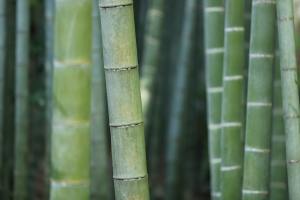
The second “gentleman” is Zhuzi (竹子), or bamboo.
It does not have a powerful trunk or large and important ramifications, however it manages to propagate in any terrain and often rises to the sky, fearless and reckless despite the small size of the trunk.
This is because it has a feature that makes it truly unique: bamboo is flexible.
During bad weather its flexible trunk can swing and bend a lot, but this is precisely its strong: bamboo bends but does not break.
This is how man should be. A man cannot help but bend in the weather of life, but he must be “flexible” enough to straighten up and never break.
The third “gentleman” is Lanhua (兰花), or the orchid.
Confucius said, “Orchids grow in deep valleys and never stop giving off their fragrance even when no one is around; the principles and virtue of gentlemen shouldn’t change because of misery.”
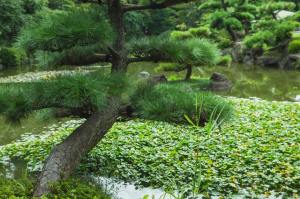
Finally there is the fourth “gentleman” who is the most important and the most loved: Songshu (松树), that is the pine.
The pine is considered a tree that ages well, has a powerful body, grows and develops in all kinds of places and can overcome any adversity – just like a human being should be. Pine has been used by all Chinese, Japanese and Korean doctrines, not only visually for its strong figure, but also for his sound.
The sound of the wind in the pines is a renowned symbol of wisdom for tea drinkers.
Many poets have used pine in their tea-related poems, so I leave you with a poem by Yang Wantil:
“I am walking slowly in the quiet temple,
the shadow of the old pine falls into the cup of tea “
Anyone would like to study the Chinese tea ceremony in Italy can do it at Jaku Tea Ceremony School: http://www.cerimoniadelte.it/lezioni/

 The art of tea blog / Blog l'arte del tè